Winstanley Estate furniture removals insider tips
If you are moving furniture around Winstanley Estate, the difference between a calm move and a stressful one usually comes down to the small things. The stair turns, the narrow hallways, the lift timing, the neighbour parking situation, the sofa that looked fine in the lounge but suddenly seems much larger on moving day - it all adds up. These Winstanley Estate furniture removals insider tips are designed to help you think ahead, avoid the usual snags, and make the whole process feel less like a scramble and more like a plan.
Truth be told, furniture removals in an estate setting are rarely just about lifting and loading. You are dealing with shared spaces, access routes, timing, protection for walls and floors, and the practical reality of getting bulky items out without damage. In this guide, you will find step-by-step advice, common mistakes to avoid, and the kind of practical know-how that helps whether you are moving a single room, a whole flat, or a larger home. If you want a broader overview of moving support, the site's removal services and home moves pages are useful starting points too.
Table of Contents
- Why Winstanley Estate furniture removals insider tips Matters
- How Winstanley Estate furniture removals insider tips Works
- Key Benefits and Practical Advantages
- Who This Is For and When It Makes Sense
- Step-by-Step Guidance
- Expert Tips for Better Results
- Common Mistakes to Avoid
- Tools, Resources and Recommendations
- Law, Compliance, Standards, or Best Practice
- Options, Methods, or Comparison Table
- Case Study or Real-World Example
- Practical Checklist
- Conclusion
- Frequently Asked Questions
Why Winstanley Estate furniture removals insider tips Matters
Winstanley Estate furniture removals insider tips matter because estate moves tend to have more friction than people expect. You are not moving in a vacuum. There may be communal entrances, shared corridors, tight stairwells, lift bookings, resident-only parking, and occasional delays when other people are using the same space. Even a simple move can become awkward if a wardrobe will not turn the corner or a table leg catches on a bannister. That is where planning pays off.
Furniture also carries emotional and financial value. A chipped sideboard is annoying. A cracked dining table can be genuinely upsetting, especially if it was inherited or newly bought. Good removals planning protects both the item and your headspace. You are not just trying to get things from A to B; you are trying to preserve time, money, and sanity. And yes, those three are always connected on moving day.
For estate residents, there is another layer: being considerate of neighbours and the building itself. Hallways marked by scraped corners or a door propped open too long can create friction very quickly. A little care goes a long way, especially in a shared environment where people notice noise, access issues, and blocked walkways immediately.
Expert summary: the best furniture removals on Winstanley Estate are usually the ones that look boring from the outside - measured properly, packed sensibly, moved in the right order, and protected before anyone starts lifting.
How Winstanley Estate furniture removals insider tips Works
The process is straightforward in theory, but the details matter. A furniture move usually starts with a quick assessment of what is being moved, how delicate it is, and how it will actually leave the property. In an estate setting, that means looking beyond the room list and checking the route. Door widths, stair landings, lift access, parking distance, and the path from front door to vehicle all need attention.
Next comes preparation. Items should be emptied, cleaned if needed, and broken down where possible. Mattress covers, furniture blankets, protective wrapping, and proper lifting equipment can all make a huge difference. If you have ever tried to carry a heavy oak chest down a narrow stairwell without a plan, you will know why this matters. One awkward twist and the whole thing becomes a drama.
On moving day, the sequence matters: protect the route first, move the largest items while everyone is fresh, then load lighter boxes and loose pieces around them so the vehicle space is used efficiently. If you are using a professional crew, they will usually follow a rhythm that keeps things safe and fast. If you are doing it yourself, keep the same principle in mind. No heroics. Just method.
For smaller or lighter loads, a flexible option such as a man with a van can suit quick estate jobs, while larger house moves may call for a fuller team through house removals or movers. The right fit depends on volume, access, and how many hands you need on the day.
Key Benefits and Practical Advantages
When done properly, furniture removals on Winstanley Estate offer a few clear advantages. First, the move is faster. That sounds obvious, but the speed comes from preparation rather than rushing. Items that are measured, dismantled, labelled, and protected will move through the building far more smoothly than bulky, half-packed furniture.
Second, there is less damage risk. This applies to your possessions, but also to walls, floors, lifts, and door frames. A well-managed move tends to use padding, corner guards, and sensible carrying methods. You may not notice these details when they are done well, which is exactly the point.
Third, it is easier to coordinate. On an estate, timing can be everything. If you have a lift slot, a parking window, or neighbours to keep informed, a structured approach helps everything line up. That alone can reduce a surprising amount of stress.
There is also the financial benefit of not needing to fix mistakes later. Replacing damaged furniture, repainting scuffed walls, or paying for an extra trip because the van was under-sized can all be avoided with proper planning. In our experience, the cheapest move is rarely the one with the lowest initial quote. It is the one with the fewest surprises.
Who This Is For and When It Makes Sense
These tips are for anyone moving furniture on or around Winstanley Estate, but they are especially useful if you are:
- moving from a flat with stairs or limited lift access
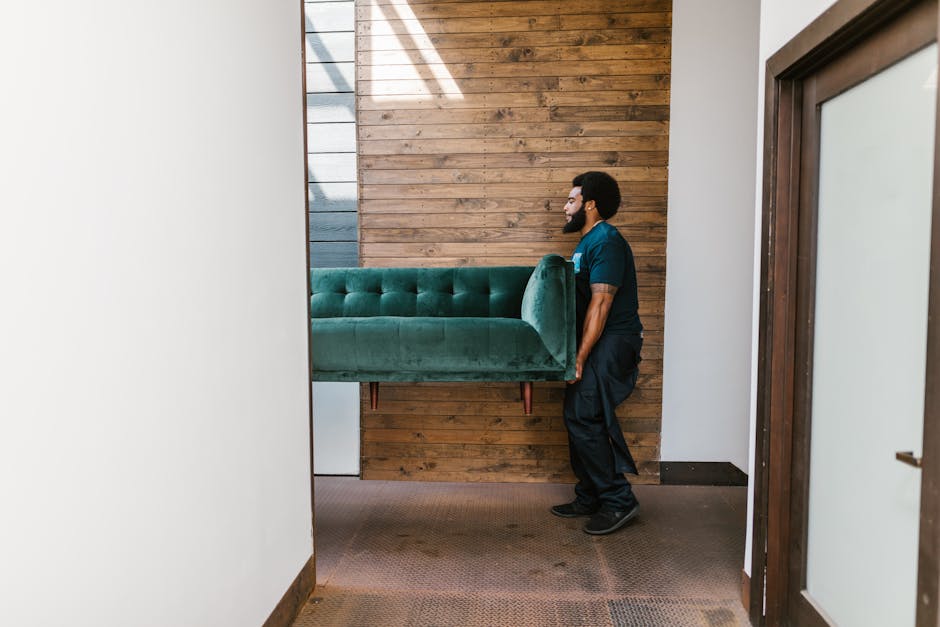
- relocating bulky items such as wardrobes, sofas, beds, or dining sets
- working to a tight schedule on a weekday or weekend
- sharing access with neighbours, building staff, or parking restrictions
- handling a partial move where only selected items are going
- worried about damage to high-value or sentimental furniture
It also makes sense if you are comparing different move types. Some people only need a light-load solution and are better served by man and van removals or a removal van. Others need a fuller team and a larger vehicle because the furniture volume is just too much for a minimal setup. No shame in that. Most people underestimate volume at least once.
If your move is part of a larger relocation, you may also want to look at house movers or even packing and unpacking services if you would rather hand over the fiddly bits.
Step-by-Step Guidance
1. Walk the route before you lift anything
Start by checking the route from each room to the exit. Measure awkward points, note low ceilings, and identify where furniture might need to be turned or tilted. This is one of those small jobs that can save a lot of trouble later.
2. Measure the furniture, not just the room
A lot of people measure the new room but forget to measure the sofa, bed base, cupboard, or desk. You need both sets of numbers. Write them down. Keep them visible. A phone note is fine, but a paper list on the kitchen counter somehow works better on moving day.
3. Empty and dismantle what you can
Drawers, shelves, detachable legs, headboards, and table leaves should all be dealt with in advance where possible. Empty furniture is lighter, safer, and less likely to buckle under pressure. Keep screws and fittings in labelled bags taped to the right item so you are not hunting for them later.
4. Protect delicate surfaces
Use wrapping, blankets, or covers for polished wood, glass, mirrors, and upholstered items. This is where a bit of care saves a lot of heartache. Even if the furniture itself is sturdy, corners and edges are usually vulnerable.
5. Clear the building access points
Move shoes, plant pots, loose mats, and anything else that could trip someone up. If the hallway feels narrow before the move, it will feel narrower once a dresser is being carried through it. Honestly, it always does.
6. Load in the right order
Heavier and more robust furniture should usually go in first, with lighter pieces and soft items filling the gaps around them. The aim is to keep items stable, not to pack the vehicle like a puzzle just for the sake of it.
7. Do a final sweep before departure
Check cupboards, under beds, behind doors, and inside storage ottomans. People always leave one thing behind. Usually something oddly important, like the charger, the kettle, or the envelope with the keys.
Expert Tips for Better Results
One of the most useful Winstanley Estate furniture removals insider tips is to plan for the worst turning angle, not the best. If a wardrobe can only fit upright by a few centimetres, assume the angle will be awkward and prepare accordingly. That means protecting ceilings, lowering shelves, and having a second person guide the turn.
Another tip: take photos of complex furniture before dismantling. This is especially helpful for wardrobes, modular shelving, or bed frames with parts that look suspiciously identical. The photo becomes your memory when energy is low and tempers are a bit frayed.
Label everything in plain English. Not "box 3". Better to write "lamp shades", "living room cables", or "TV stand screws". Future you will be grateful. Future you is often under-rated.
If you are moving in hot weather or during a busy time of day, keep water nearby and pace the work. Sounds basic, but a tired person makes more mistakes, and tired people also forget to eat. A quick break can prevent a long argument over whether the sofa should go sideways or upside down. Let's face it, no one enjoys that discussion.
For business moves or mixed-use premises, the same logic applies, only more so. You may need support from office relocation services or commercial moves if furniture is being moved alongside work equipment, desks, or storage units.
Common Mistakes to Avoid
The biggest mistake is assuming furniture will "just fit". That phrase has caused more moving-day tension than almost anything else. Measure properly, and then measure again. Especially if the item is tall, awkward, or has a fixed shape that cannot flex.
Another common error is underestimating the time needed for access. Estate moves can involve waiting for lifts, sharing corridors, or dealing with a van parked a little further away than hoped. Those minutes add up. A schedule that looks fine on paper can feel very different when someone is carrying a mattress down three flights of stairs.
People also forget to protect the property itself. Wall scratches, floor scuffs, and door-edge chips are often preventable. A few blankets and some floor protection are much cheaper than repair work. Small effort, big payoff.
Then there is the classic mistake of packing the van too tightly without a loading plan. If items are wedged in at random, unloading becomes harder and damage risk goes up. It is more efficient to think in layers and sections.
Finally, avoid leaving insurance and terms questions until the day of the move. If a company is helping with your removals, you should understand what is included, what is not, and how claims or complaints are handled. If needed, pages such as insurance and safety and terms and conditions are the right places to check the practical detail before you sign anything.
Tools, Resources and Recommendations
You do not need a van full of fancy equipment to do a good furniture move, but a few items help enormously:
- measuring tape
- labels and marker pens
- blankets or furniture wraps
- strong tape and zip bags for screws and fittings
- protective gloves
- trolley or sack barrow for heavier items
- floor protection or old sheets for hallways
- basic tools for dismantling beds and shelving
If you are trying to decide whether to do it yourself or book help, think about volume, fragility, and access. A lighter job may only need a smaller team and a man with a van removal approach. Larger jobs often move more smoothly with a proper crew and the right vehicle size, especially if you have multiple bulky items or a long carry from the entrance to the vehicle.
Some people also like to use a packing service for the fiddly items and a moving service for the lifting, which is where packing and unpacking services can be genuinely useful. Not for everyone, but for busy households it can be a sanity-saver.
For sustainability-minded moves, it is worth thinking about reuse and waste reduction too. If you have items you no longer need, the site's recycling and sustainability page is relevant to anyone trying to handle old furniture responsibly rather than simply dumping it.
Law, Compliance, Standards, or Best Practice
Furniture removals are not usually complicated from a legal point of view, but a few best-practice points matter. First, movers should operate safely. That means sensible lifting, proper handling of heavy items, and care in shared spaces. In the UK, workplace and transport safety expectations are taken seriously, so professional moving crews should have proper procedures rather than relying on guesswork.
Second, insurance should be clear. You want to know how accidental damage is handled, what exclusions exist, and what evidence may be required if something goes wrong. This is one of those unglamorous parts of moving that feels tedious until the moment it matters. Then it matters a lot.
Third, there is an expectation of honest communication around price, access, and service scope. If the move involves stairs, waiting time, dismantling, or extra labour, those details should be agreed up front. Otherwise, the day can turn messy very quickly.
Finally, if a company has published policies on health and safety, payment security, privacy, accessibility, or complaints handling, those pages help show that the business takes service standards seriously. They are not just decoration. They should give you a sense of how the company works and what to expect if there is a problem. Useful, plain and simple.
Options, Methods, or Comparison Table
Different move types suit different situations. The right choice depends on how much you are moving, how far it needs to go, and how much help you want on the day.
| Option | Best for | Strengths | Watch-outs |
|---|---|---|---|
| Man and van | Small to medium loads | Flexible, often quicker to book, good for local moves | Not ideal for large furniture volumes or very heavy items |
| Full removal team | Whole-home or multi-room moves | More hands, more structured loading, better for bulky items | Usually needs more planning and a higher budget |
| Self-move with hired vehicle | Confident movers with time and help | Control over packing and timing | Higher physical effort, more chance of delays or damage |
If your furniture is mostly compact and the access is easy, a smaller option can make sense. If you have a large sofa, bed frames, wardrobes, and several fragile pieces, the better choice is usually a fuller setup with enough space and enough people. Not glamorous, but practical wins every time.
Case Study or Real-World Example
Here is a realistic example. A household on Winstanley Estate needed to move a three-seater sofa, a dining table, four chairs, a bed frame, and two bookcases from a first-floor flat. Nothing outrageous. But the stairwell had a tight turn at the landing, the parking space was a short walk away, and one bookcase was wider than it first appeared once measured properly.
Before moving day, the items were checked, the bed frame was dismantled, and the bookcase shelves were removed. The route was cleared, a couple of blankets were laid down near the doorway, and the sofa was wrapped before anyone lifted it. That small bit of prep avoided dragging fabric through the building and kept the corners of the walls intact.
The move still took work, of course. Furniture removals always do. But the day stayed controlled because the awkward pieces were handled first, the team knew the route, and nobody had to stop midway to figure out whether a table leg should be removed or forced through. That is the real difference. Not perfection. Just less friction.
And sometimes that is enough. The kettle gets plugged in, the sofa ends up in the right corner, and the place starts to feel like yours again.
Practical Checklist
Use this checklist the day before and the morning of your move:
- measure all furniture and the main access points
- dismantle anything that can safely come apart
- label screws, fittings, and loose parts
- wrap fragile, polished, or upholstered items
- clear hallways, stairs, and entrance routes
- confirm parking and access arrangements
- check lift availability or booking times if relevant
- prepare drinks, snacks, and a phone charger
- keep a floor plan or room list handy for unloading
- set aside essentials you do not want packed by mistake
- review insurance, payment, and service terms
Quick tip: keep one "open first" bag with keys, medication, cleaning wipes, charger cables, and basic tools. You will thank yourself later, probably before noon.
Conclusion
Winstanley Estate furniture removals insider tips are really about reducing uncertainty. Measure carefully, protect the property, choose the right move size, and keep the loading plan simple. Do those things and the whole process becomes much easier to manage. You do not need to be a moving expert to get a good result; you just need a bit of structure and the patience to do the boring parts properly.
If you are comparing service options, it may also help to look at removals near me and the broader removals service information to see what fits your situation best. The right choice is the one that matches your furniture, your access, and your timeline - not just the one that sounds easiest in the moment.
Get a free quote today and see how much you can save.
And if you are standing in the middle of a half-packed room wondering where to start, start small. One shelf, one label, one doorway at a time. That's usually how the good moves begin.
Frequently Asked Questions
What are the most useful Winstanley Estate furniture removals insider tips for a first-time move?
Measure everything, clear the route, dismantle bulky items where possible, and book enough help for the heaviest piece rather than the lightest. That combination prevents most moving-day headaches.
How do I know if I need a man and van or a full removals team?
If you only have a small to medium load and access is straightforward, a lighter service may be enough. If you have multiple bulky items, stairs, or a longer loading process, a fuller team is usually safer and less stressful.
Should I dismantle furniture before the movers arrive?
Yes, where it can be done safely. Bed frames, shelves, removable legs, and similar items are usually easier to move when broken down. Just keep all fittings together and labelled.
How far in advance should I prepare for furniture removals?
Ideally a few days before, not the night before. A gradual approach gives you time to measure, label, pack accessories, and deal with anything awkward without panic.
What furniture causes the most trouble in estate moves?
Wardrobes, large sofas, mattresses, glass items, and heavy wooden furniture tend to be the main culprits. They are awkward to carry, harder to turn, and more likely to brush walls or door frames.
How can I protect walls and floors during the move?
Use blankets, floor coverings, and clear pathways. It sounds simple, but it really does reduce scuffs and knocks. A little preparation is much easier than repainting later.
Is packing service worth it for a furniture move?
It can be, especially if you are busy or moving with fragile items. A service such as packing and unpacking can save time and help keep smaller items organised while the furniture itself is being moved.
What should I check before booking a removals company?
Look at service scope, access assumptions, insurance details, payment terms, and how complaints are handled. That way you know what is included and where the responsibilities sit.
How do I avoid damage to sentimental furniture?
Wrap it properly, move it first while everyone is fresh, and do not rush the awkward turns. If something is especially precious, say so clearly before the move begins.
Can I combine furniture removals with other moving services?
Yes. Many people combine furniture transport with packing support or a broader home move. If you are moving a whole property, house removals or house movers services may be a better fit than a standalone lift-and-load job.
What is the biggest mistake people make on moving day?
Underestimating the size and complexity of the furniture. The item that looks manageable in the morning can become the one thing that slows everything down. Measure first and plan for the awkward angle.
How do I make moving day less stressful overall?
Keep essentials separate, confirm the access plan, communicate clearly with helpers, and do not overpack the schedule. A calm pace is usually faster than a rushed one, strange as that sounds.